Shade-Tolerant Grass Seed: Getting a Lawn Under Large Trees
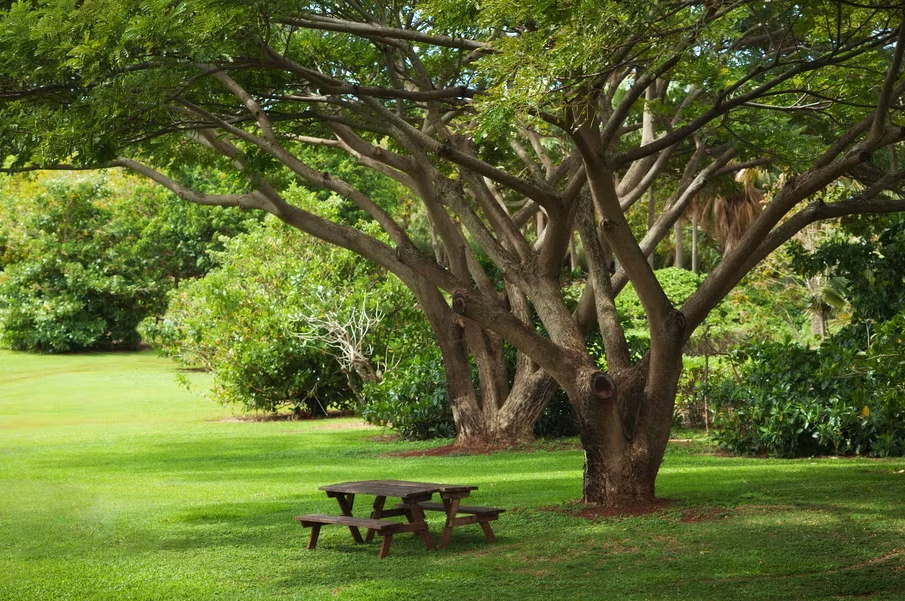
Establishing a lush lawn beneath mature shade trees is one of the most frustrating challenges in residential landscaping. Every spring, homeowners spread fresh seed over bare patches beneath their oaks, maples, and pines, only to watch the tender shoots wither by midsummer. The failure rarely stems from poor watering or bad luck. Instead, it comes down to a fundamental misunderstanding of the ecosystem thriving beneath a mature tree canopy.
Growing grass under trees requires more than simply tossing down a generic shade blend from a big-box store. It demands an intentional strategy that accounts for solar radiation, aggressive root competition, soil biology, and precise species selection. With the right seed cultivars and a few adjustments to canopy management and lawn care, you can turn those stubborn, dusty circles into a healthy carpet of green.
The Hidden Battle Beneath the Canopy
Most people assume the primary enemy of turf grass is darkness. While reduced sunlight is certainly a major hurdle, it is only part of the problem. A mature shade tree is a massive biological pump that fiercely competes with turf for every ounce of available resources in the top foot of soil.
A mature deciduous tree can absorb hundreds of gallons of water per day during the heat of summer. Its vast network of shallow, fibrous feeder roots occupies the exact same soil zone that grass roots need to establish themselves. When rainfall hits the canopy, the leaves intercept a significant portion before it ever touches the ground, creating a rain shadow beneath the branches. The moisture that does make it through is rapidly hoarded by the tree.
Light quality under a tree is also vastly different from open-sun light. Trees absorb the red and blue wavelengths of the light spectrum for photosynthesis, reflecting or filtering through primarily green and far-red light. Grass blades need those red and blue wavelengths to thrive. As a result, turf grass growing in deep shade receives depleted light that yields very little energy.
Compounding these challenges is poor air circulation. Tree canopies trap ambient humidity and block gentle breezes, meaning morning dew sits on grass blades for hours longer than it does in open turf. This extended leaf wetness creates an ideal incubator for fungal pathogens like powdery mildew, brown patch, and leaf spot. To succeed, any grass you plant must be biologically equipped to handle drought, nutrient scavenging, reduced light quality, and disease pressure simultaneously.
Choosing the Right Seed for Tree Canopies
You cannot force a full-sun grass variety to adapt to low-light conditions through sheer effort or extra fertilizer. The physiology must match the environment. For tree-heavy landscapes, your regional climate dictates your initial options, but the specific grass species and cultivars determine your long-term success.
Cool-Season Champions: The Fine Fescue Family
For homeowners in the northern half of the country and the transition zone, nothing rivals fine fescues for shade tolerance. Fine fescue is an umbrella term encompassing several related subspecies, each with narrow, needle-like blades that reduce moisture loss and require minimal nutrition.
-
Chewings Fescue: An upright, bunch-type grass that establishes faster than other fine fescues. It boasts exceptional tolerance for acidic soils and drought, making it ideal for the dry shade found beneath hardwoods.
-
Creeping Red Fescue: Known for its creeping underground rhizomes, this species knits thin turf together and repairs minor bare patches over time. It tolerates deep dappled shade better than almost any other cool-season turfgrass.
-
Hard Fescue: One of the most durable, low-maintenance options available. Hard fescue handles heat, cold, and low-fertility conditions with ease. Its slow vertical growth means less frequent mowing.
-
Sheep Fescue: An exceptionally drought-tolerant bunch grass suited for naturalized areas or low-maintenance shade lawns where a manicured golf-course look is not required.
Blends containing multiple fine fescue varieties offer the highest success rate. If one variety struggles with a localized soil condition or fungal pressure, another in the blend will step in to fill the gap.
Turf-Type Tall Fescue (TTTF)
If your shaded area sees substantial foot traffic from kids or dogs, fine fescues may prove too delicate. In these scenarios, Turf-Type Tall Fescue (TTTF) is the next best alternative. Modern TTTF cultivars feature deep root systems that can push three to six feet into the ground, allowing them to scavenge water well below the primary tree root zone.
While TTTF requires slightly more light than fine fescue—typically four to five hours of filtered sunlight daily—it handles heat, wear, and summer stress far better. Look for specialty shade-tolerant TTTF cultivars rather than pasture-grade Kentucky 31, which produces coarse, wide blades and thin turf in low light.
Warm-Season Realities: Zoysia and Cultivar Nuances
Warm-season lawns in the South present a distinct challenge because C4 grasses naturally crave intense, blistering sunlight. Bermudagrass will quickly thin out, grow leggy, and die in shaded conditions, making it an exercise in futility beneath mature canopies.
For warm-season seed, your most viable candidate is Zenith Zoysia. Zoysiagrass possesses moderate shade tolerance and creates a dense, carpet-like sod that blocks weeds. While Zenith can survive on roughly four to five hours of direct or dappled sunlight, it will struggle in deep, all-day shade.
It is worth noting that the most shade-tolerant warm-season grass, St. Augustinegrass (specifically cultivars like Palmetto or CitraBlue), cannot be grown from seed because viable commercial seed is unavailable. If you live in the deep South and need grass under dense trees, sodding or plugging St. Augustine is usually a far more reliable path than seeding.
Pruning for Light: Canopy Management
Before buying a single bag of seed, look up. You do not need to cut down your beloved shade trees to get grass to grow, but you do need to let the sun in. Thoughtful pruning can dramatically increase the amount of usable sunlight reaching the soil without compromising the tree’s health or natural shape.
The most effective technique is raising the canopy. By selectively pruning the lowest limbs back to the trunk, you raise the tree’s bottom foliage line to eight or ten feet above the ground. This allows low-angle sunlight from early morning and late afternoon to sweep across the lawn beneath the branches, providing crucial hours of photosynthesis that high-noon sun cannot deliver through dense canopies.
Another valuable method is canopy thinning. An experienced arborist can remove crossing, dead, or crowded interior branches to create dappled light throughout the midday hours. Avoid aggressive “topping” or excessive interior clearing, which stresses the tree, stimulates weak water-sprout growth, and looks unsightly. The goal is simply to break up a solid canopy blanket into a moving mosaic of sun and shadow.
Preparing the Seedbed Without Harming Tree Roots
The quickest way to kill a mature tree is to take a mechanical rototiller to its root zone. Stripping or severing the shallow feeder roots that lie in the top six inches of soil invites root rot, destabilizes the tree, and induces severe canopy dieback. You must prepare the soil gently.
Begin by clearing away all surface debris. Fallen twigs, thick layers of dead leaves, and decaying seed pods block light and harbor mold. Use a flexible leaf rake rather than a heavy metal garden rake to avoid tearing the bark off exposed tree roots.
Next, address soil compaction. Tree zones suffer heavy compaction from years of rain impact, foot traffic, and root expansion. Rent a core aerator and make several passes over the area, taking care to steer clear of massive structural surface roots. Core aeration pulls small plugs of soil out of the ground, relieving compaction, encouraging air exchange, and creating natural pockets for new grass seed to lodge.
After aerating, apply a thin layer of screened compost—no more than a quarter-inch to a half-inch thick. This light topdressing introduces organic matter and beneficial microbes, helping to buffer soil moisture without suffocating the tree’s root system. Never dump several inches of topsoil over an existing tree root zone to level it out; doing so cuts off oxygen to the tree roots and can kill the tree over a two- to three-year period.
If you are dealing with acid-loving trees like oaks or pines, run a basic soil test. Pines and oaks do not automatically turn soil into battery acid as folklore suggests, but long-term accumulation of organic litter can depress soil pH below the ideal 6.2 to 6.8 range. If your pH is sitting below 6.0, apply agricultural lime according to your soil test recommendations to optimize nutrient availability for seedling growth.
Seeding Technique and Timing
Timing makes all the difference when seeding beneath mature trees. For cool-season grasses, the best window is late summer to early autumn.
During early fall, several environmental factors work in your favor. First, the sun sits lower in the sky, casting longer light patterns beneath tree branches. Second, deciduous trees naturally begin to shed leaves, progressively increasing light penetration to the ground. Third, soil temperatures remain warm enough for rapid germination, while cooler nighttime air reduces the fungal risks that plague spring seedlings. Finally, spring-germinating weeds are no longer actively competing for space.
If you must seed in the spring, do so as early as the soil can be worked, well before the tree’s leaf buds open. This gives young grass seedlings a head start of a few weeks in full sun before the canopy closes overhead.
When spreading seed, increase your application rate slightly above the standard overseeding recommendation on the bag, but do not double it. Overcrowding in shaded environments causes weak, spindly seedlings that compete with one another for limited light, making them vulnerable to damping-off disease.
Ensure firm seed-to-soil contact. After spreading your seed blend over the aerated and topdressed soil, lightly drag the back of a leaf rake over the surface to settle the seeds into the aeration holes. Follow up with a lightweight lawn roller filled partially with water to press the seed firmly against the dirt.
Keep the area consistently moist, not soaked. Water lightly two to three times a day using a fine mist nozzle or oscillating sprinkler for the first two to three weeks. In the shade, water evaporates much slower than in open sun, so pay close attention: if the soil feels saturated and squishy, back off. Overwatering shaded seed is the fastest path to fungal failure.
Long-Term Maintenance for Shade Turf
Once your shade grass establishes, you cannot treat it like the rest of your sunny lawn. Turf growing under trees is essentially living on an energy diet, and your maintenance routine must reflect that reduced metabolic rate.
Raise Your Mowing Height
The single most impactful habit you can adopt is raising your mower deck. While sunny lawns are often cut at two to two-and-a-half inches, shade-grown fine fescues and tall fescues should be cut at three-and-a-half to four inches.
Every fraction of an inch of grass blade is a solar panel. Taller grass blades have significantly more surface area to capture scarce photons of light and produce carbohydrates through photosynthesis. Mowing shade grass short starves the plant, causing root systems to shrink and leading to thin, patchy turf within a single season. Never cut off more than one-third of the total grass blade length in a single mowing session.
Rethink Your Fertilizer Regimen
A common mistake is applying heavy doses of high-nitrogen fertilizer to shade lawns in an attempt to push growth. In shade, high nitrogen produces thin, watery, elongated cell walls in grass blades, making the turf weak, pale, and defenseless against fungal infections.
Grass in the shade needs roughly half the nitrogen of grass growing in full sun. Aim for one to two pounds of slow-release nitrogen per thousand square feet per year, divided between early fall and late spring applications. Focus on balanced fertilizers that provide adequate potassium, which strengthens cell walls, improves drought resilience, and boosts disease resistance.
Water Deeply and Early
Because tree roots actively pull moisture out of the upper soil horizons, your lawn needs supplemental water during hot, dry spells, even if it looks protected from the sun.
Water early in the morning, ideally between 5:00 AM and 9:00 AM. This gives grass blades time to dry off in the morning air before mid-afternoon heat settles in, minimizing the hours that leaves stay wet. Instead of shallow daily waterings, soak the soil deeply once or twice a week to encourage grass roots to grow deeper, down toward moisture levels that the tree’s surface roots have not entirely depleted.
Keep the Lawn Clear of Fallen Leaves
In a sunny yard, a light scattering of autumn leaves can often be mulched directly into the turf with a mower. Under a tree canopy, you must be far more diligent.
Broad deciduous leaves—especially those from maples, sycamores, and oaks—act like opaque blankets. If left on tender shade grass for even three or four days during cool, damp weather, they block out the little light reaching the turf and trap moisture, causing rapid decay and fungal suffocation. Blow or rake leaves off shade-tolerant turf weekly throughout autumn to ensure the grass maximizes its photosynthetic window before winter dormancy.
Knowing the Limits of Shade Turf
While modern shade-tolerant grass seed produces impressive results in difficult areas, grass remains a plant that relies fundamentally on sunlight. Even the hardiest fine fescues need at least three to four hours of filtered or direct sun daily to generate enough energy for long-term survival.
If you have an area directly against the north side of a privacy fence beneath a dense, unpruned evergreen canopy, no turfgrass variety will survive there permanently. Recognizing biological limits saves money, time, and frustration.
Where grass simply cannot thrive, embrace the natural landscape of the tree. Extend your mulch ring out to the tree’s natural drip line using shredded bark, pine straw, or composted leaf mulch. Alternatively, install shade-loving native groundcovers such as wild ginger, creeping phlox, sweet woodruff, or hostas. These plants evolved specifically for forest-floor living and will happily flourish where even the best shade seed cannot.
By managing the tree’s canopy, choosing tailored fine fescue or tall fescue seed blends, and adjusting your mowing and watering habits, you can stop fighting your mature trees and start enjoying a balanced, vibrant yard that stays green right up to the trunk.