Under-Bed Storage Mistakes That Make Your Bedroom Look Cluttered
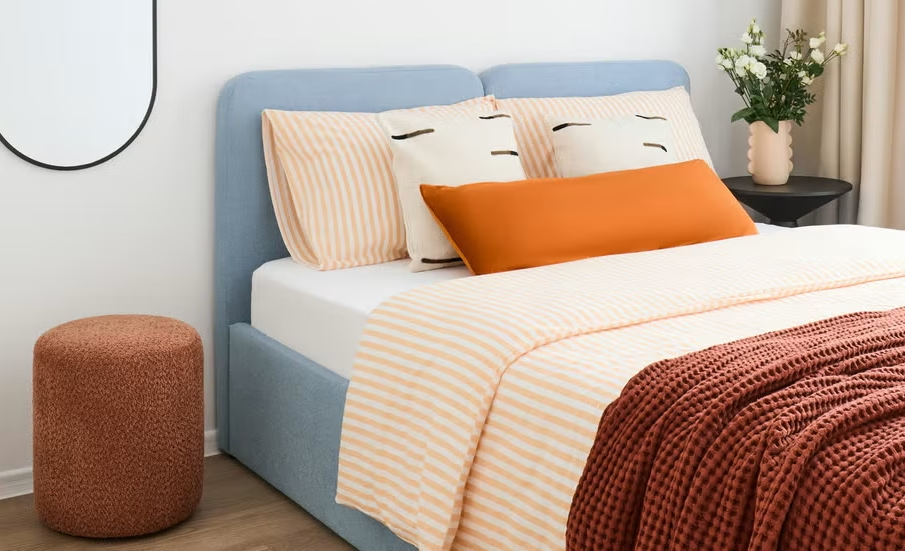
The empty expanse beneath a bed frame is often hailed as a small-space miracle. In urban apartments, modest bungalows, and guest rooms starved for closet capacity, those few inches of clearance represent several cubic feet of prime domestic real estate. Yet, despite the best intentions to tuck excess belongings out of view, that shadowy lower plane often works against the serenity of the room. Instead of creating a sense of calm minimalism, under-bed storage frequently becomes an epicenter of visual noise and lingering disorder.
A bedroom should serve as a retreat from sensory overload. When your peripheral vision catches the edges of jammed plastic bins, sprawling cardboard boxes, or tangled bedding every time you cross the threshold, your brain registers that friction as unfinished business. True organization is not simply about removing objects from your direct line of sight; it is about how those objects integrate into the room’s architecture. Avoiding a few common under-bed storage missteps can instantly transform your bedroom from a cluttered holding zone into a cohesive, restful sanctuary.
The Pitfall of the Unedited Dumping Ground
The greatest mistake with under-bed storage begins before a single box slides under the mattress: treating the cavity as an emotional and logistical graveyard for things you simply do not want to deal with. Because the space is horizontal and low to the ground, it easily welcomes items that have no logical connection to one another.
When you push broken appliances, unfiled tax documents, old college textbooks, half-used craft supplies, and forgotten holiday decorations under the frame, you create a chaotic undercurrent. This lack of intention invariably leads to overpacking. Within months, the area turns into an impenetrable barricade where items in the back are completely forgotten, prompting you to purchase unnecessary duplicates.
Under-bed storage works best when dedicated to a single, clearly defined category. Seasonal textiles, such as heavy winter down comforters, extra wool blankets, out-of-season linens, or rotating capsule wardrobes, are the gold standard. When the inventory beneath your mattress has a singular purpose, maintaining order requires virtually no effort, and the space retains an organized baseline.
Relying on Clear Plastic Bins Without Visual Concealment
Clear plastic storage tubs are a staple of basement and garage organization, where transparent walls help you locate tools or holiday lights in seconds. In a bedroom, however, that same transparency works directly against you.
Light enters the bedroom from windows and bedside lamps, casting shadows that reveal whatever sits beneath the frame. When you slide clear tubs under an open bed, the viewer’s eye does not register a tidy container; it registers a messy collage of neon ski jackets, mismatched floral pillowcases, tangled cords, and compressed shoes. That internal disarray bleeds into the aesthetic of the entire room, breaking the clean lines of your furniture.
Unless you have a tailored bed skirt that completely drapes to the floor, opt for opaque, solid-walled storage boxes. Bins wrapped in textured woven fabric, heathered linen, canvas, or even low-profile dark wood blend seamlessly into the shadows beneath the frame. When your gaze sweeps across the floor, these opaque surfaces recede into the backdrop rather than demanding visual attention.
Ignoring Proportions and the Two-Inch Setback Rule
Even the most attractive containers can make a bedroom feel cramped if they violate the physical scale of the bed frame. One of the most glaring errors is choosing containers that are too tall for the clearance, forcing you to lift the bed rail slightly or wedge the bins in so tightly that the mattress foundation buckles.
Equally problematic is letting containers creep outward toward the edge of the perimeter. When bins sit flush with the exterior legs of the bed, or worse, protrude an inch or two into the walking path, they ruin the silhouette of the furniture. They interrupt foot traffic, catch on duvet covers, and stub bare toes in the middle of the night.
To maintain a light, airy feel, follow the two-inch setback rule. Containers should sit at least two to three inches back from the exterior bed rails and footboard. Keeping storage tucked within this shadow line allows the bed frame to float visually, maintaining the natural architectural lines of the room while hiding the containers in ambient shadow.
Creating a Mismatched Container Patchwork
When closet space runs out, many people reach for whatever vessel is immediately on hand: a discarded online delivery box, a branded shopping tote, a plastic grocery bag, and a beat-up gym duffle. Sliding a patchwork collection of mismatched vessels beneath a bed creates instant optical clutter.
The human brain craves symmetry and rhythm, particularly in environments designed for sleep. When you look beneath the frame and see multiple colors, textures, logos, and materials, the visual dissonance registers as messiness, regardless of how neatly the contents are folded inside.
Invest in a uniform suite of matching containers. Using two to four identical low-profile bins provides immediate visual cohesion. When containers share the exact same height, color palette, and hardware, the setup looks deliberate and custom rather than like an emergency spillover from an overcrowded closet.
Storing High-Frequency Items Under the Bed
Under-bed storage requires physical effort to access: bending down, crouching on the rug, reaching into a low space, and sliding heavy bins across the floor. Consequently, using this zone for everyday essentials is a recipe for chronic clutter.
Everyday Shoes and Casual Footwear
Storing daily sneakers or work flats under the bed almost always results in a pile of shoes left sitting half-in, half-out on the rug. The friction of pulling out an under-bed tray twice a day quickly leads to leaving shoes scattered beside the nightstand instead. Reserve under-bed shoe organizers strictly for special-occasion heels, winter snow boots, or seasonal sandals.
Daily Accessories and Wardrobe Staples
Workout gear, daily pajamas, and everyday intimates belong in accessible dresser drawers or closet shelves. Storing them beneath the bed ensures that bins will remain perpetually unlatched and half-protruding, instantly unraveling the clean look of the room. Keep under-bed real estate strictly reserved for low-frequency items that you only need to retrieve once a month or once a season.
Neglecting Dust Protection and Fabric Preservation
Under-bed cavities are natural collection zones for dust bunnies, pet dander, lint, and stray fibers. Placing items into open-top woven baskets or uncovered rolling trays may look charming in curated interior photos, but in real life, those textiles quickly accumulate a film of gray dust.
Cardboard boxes present an even worse hazard. Cardboard contains glues and organic fibers that absorb ambient moisture and attract pests like silverfish, carpet beetles, and clothes moths. Storing heirloom quilts or winter cashmere in unsealed cardboard under your mattress invites permanent fabric degradation and unpleasant, stale odors.
Protect your belongings by selecting zippered, breathable storage bags or hard containers fitted with snug, gasket-sealed lids. Breathable canvas and linen blends allow airflow while locking out airborne dust and insects, ensuring your out-of-season garments emerge fresh, clean, and ready to wear without requiring a trip to the dry cleaner first.
Overlooking Bed Skirt Architecture and Frame Styles
The relationship between your bed frame and your storage containers dictates whether your setup looks intentional or sloppy. Many people attempt under-bed storage with the wrong framing structure, producing awkward results.
If you have an open platform bed with high, spindly legs and no bed skirt, any container you place underneath will be on full display. In this case, standard utility containers will not suffice. You need furniture-grade solutions, such as matching wooden rolling drawers finished in a stain that matches the bed frame, making them look like integrated joinery.
Conversely, if you prefer to hide your storage entirely, be mindful of your bed skirt selection. Avoid billowy, ruffled bed skirts that pool heavily on the carpet, collect dust, and catch in bin zippers. Instead, choose a crisp, tailored linen bed wrap or a box-pleat dust ruffle that skims half an inch above the floor. A clean, structured drop conceals your storage completely while keeping the perimeter of your bed sharp and polished.
A Practical Strategy for Streamlined Under-Bed Storage
Restoring order to your under-bed area does not require an expensive overhaul, but it does require a structured plan:
-
Empty the perimeter completely: Pull every container out into the center of the room. Vacuum and damp-mop the floorboards or deep-clean the rug beneath the frame to eliminate accumulated dust and allergen buildup.
-
Audit aggressively: Group the contents by category. Discard damaged goods, donate clothes that no longer fit, and relocate paperwork and random household tools to designated home offices or utility closets.
-
Measure three dimensions: Measure the vertical clearance from the floor to the lowest point of the bed rail, not the mattress base. Note the total width between the frame legs and the depth from the edge of the bed to the center support beam.
-
Select cohesive containers: Choose low-profile, opaque containers designed with multi-directional wheels or felt-padded bases that glide smoothly over your flooring without scuffing hardwood or bunching area rugs.
-
Label discreetly: Place small, uniform label tags on the inward-facing handles of each container. This allows you to identify contents at a glance while keeping visible text hidden from anyone walking past the room.
When executed with discipline, under-bed storage stops feeling like a hidden closet disaster and begins functioning as an asset to your home. By choosing opaque materials, respecting the boundaries of your furniture, and storing only the right categories of belongings, you can keep your floor plan open, maximize every square foot, and cultivate the calm, clutter-free bedroom you deserve.